
Research
The Relational Method: How Community Organizing Can Reshape University Research
This is an academic peer-reviewed article about the relational method – a form of community engagement that applies the principles of community organising.
By Amanda Tattersall & Marc Stears (UCL)
Summary:
This article builds on our experience with community organising and community engaged research to offer methods and approaches for community engaged research that build off community organising practice. There is a lot of interest in ideas like co-design, but community engagement is too often performative and aesthetic rather than substantial. This piece looks at three practices that ground a more collaborative form of knowledge creation – relationally, power and uncertainty. And it offers a provocation that this kind of research calls for a shift away from detached scholarship and deeper community engagement in knowledge and research.
It is a peer-reviewed article in one of the most high-impact journals in political science. Even so, its accessible, and hopefully useful for researchers across disciplines as well as people seeking to deepen community engagement in public policy work.
The article is open access – so free no matter where you are based at a university or not.
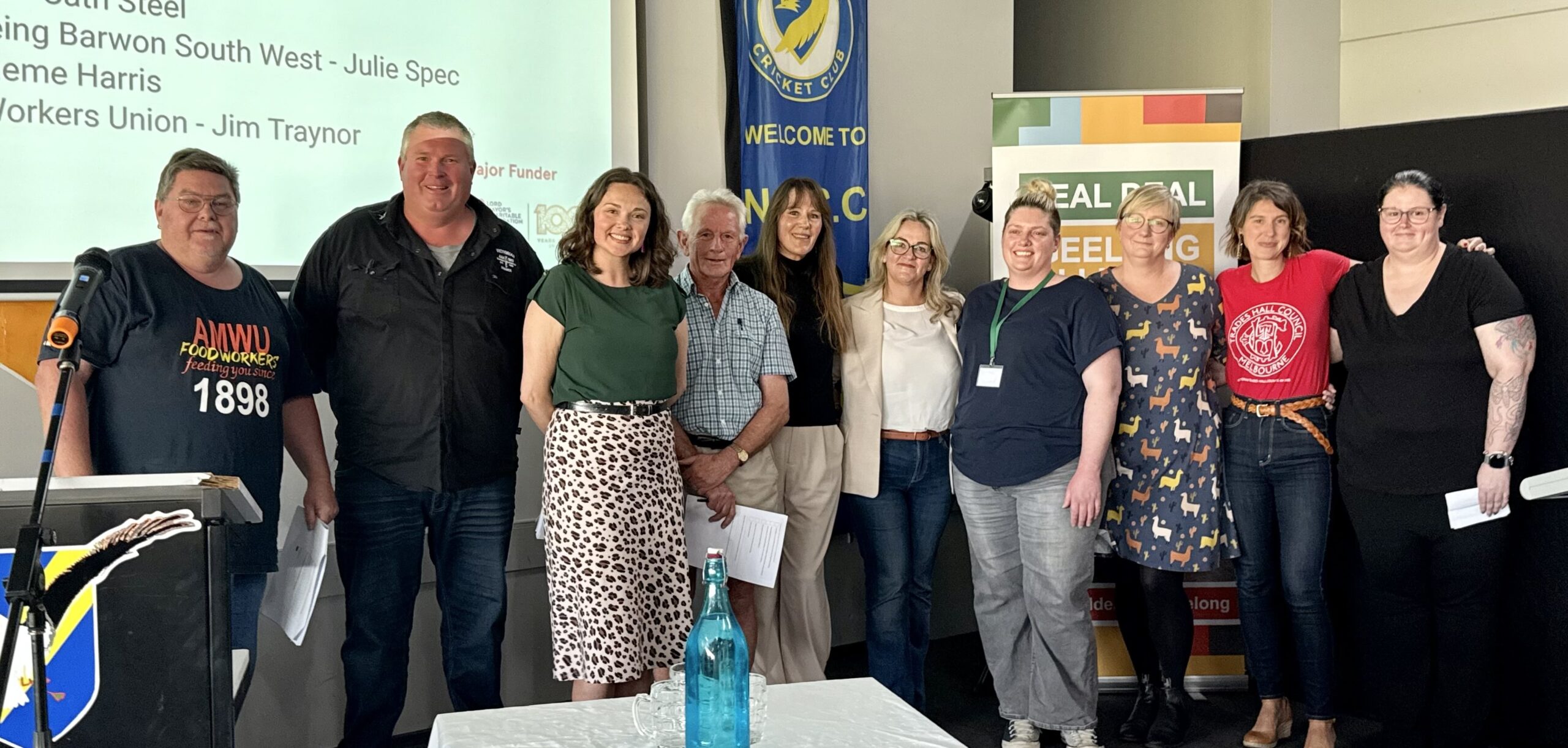
The photo features community leaders from the Real Deal for Australia project in Geelong, using the relational method to develop community-led solutions to climate and economic transition. At this event the Real Deal engaged in a negotiation with Deputy Prime Minister Richard Marles.
Abstract
Crises of confidence in the relationship between academic research and broader society has led to an explosion in interest in community-led research methods, such as codesign, community-engaged research, and participatory action research. These methods are intended as a way of reconnecting scholarship and society during a period of intense polarization, but they remain far from mainstream. This reflection considers whether community organizing, and in particular the kind of approach initiated by Saul Alinsky that borrowed from a scholarly method at the University of Chicago in the 1920s and is now practiced in more than 99 cities around the world, can offer a practical guide for scholars keen to resolve this challenge. It outlines three elements of what is labeled the “relational method” that build on the philosophical and practical tools of community organizing: relationality, power, and uncertainty. It suggests that the principles and practices of the relational method can not only strengthen community-led research practice, but, if we take a lead from community organizing and recognize the importance of the relationship between the practice of social change and the institutions that seek to produce it, it can also help us to more clearly see how the diffusion of community-led research can align with the broader goal of creating more community-engaged universities.
Citation:
Tattersall A, Stears M. The Relational Method: How Community Organizing Can Reshape University Research. Perspectives on Politics. Published online 2025:1-17. doi:10.1017/S153759272510403
More work

The global spread of community organizing: how ‘Alinsky-style’ community organizing travelled to Australia and what we learnt?
This is an academic peer-reviewed article about the spread of community organising to Australia. It documents conceptually and…
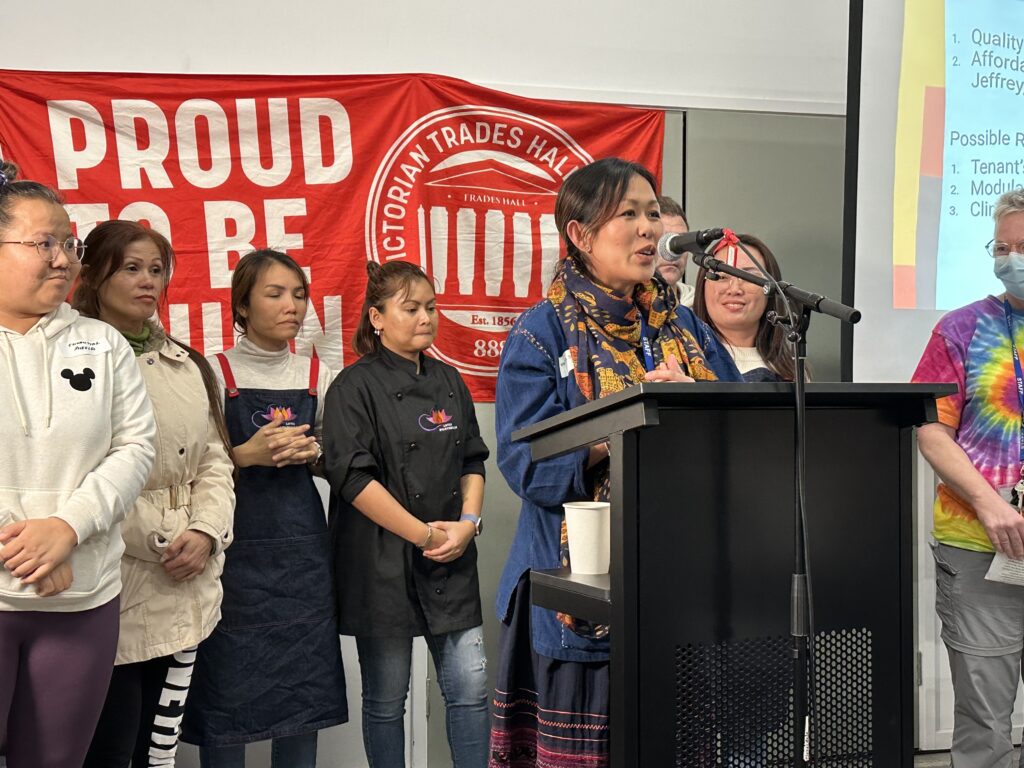
Creating a new climate transition politics? Reflections on a Real Deal for Australia.
This is an academic peer-reviewed article with an enormous team of academic and community authors about the Real…
The Shifting Power of Labor-Community Coalitions: identifying common elements of powerful coalitions in Australia and the USA
This is an academic peer-reviewed article coalition building between unions and community groups, drawing lessons from a series…